Non-Thermal Resonance Full-Layer Stimulation | Post-Facelift Contour Refinement
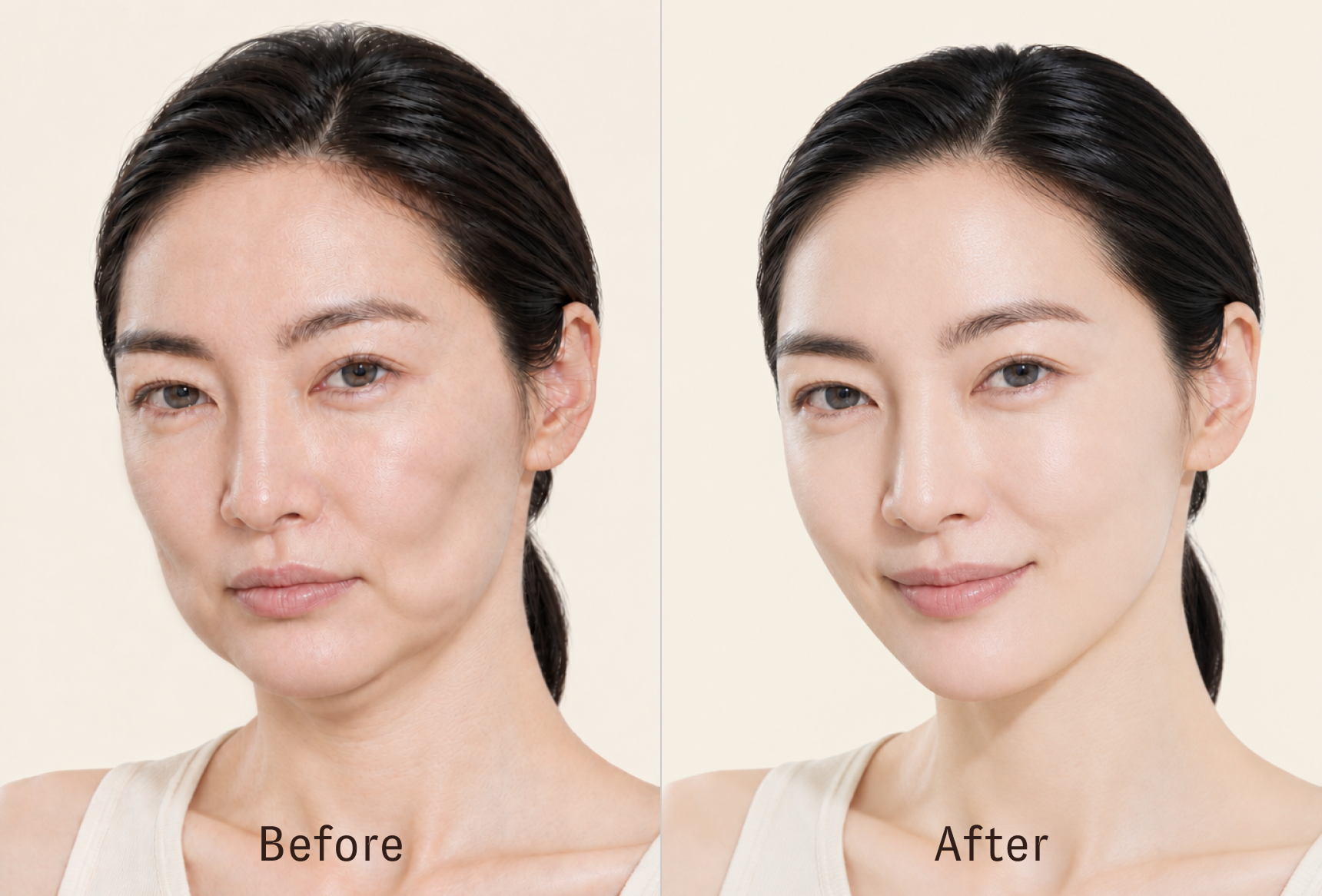
Even after swelling subsides and the jawline becomes more defined, a shallow groove may remain below the cheek, or tissue near an incision may still feel firm. A slight indentation may be barely visible when looking straight ahead in the mirror, then become more pronounced as one cheek pulls inward when smiling or speaking.
A hollow visible at rest and a dimple that appears with facial movement can reflect different changes in the underlying tissue. This article looks at why uneven contours can remain after a facelift and how KUDO’s dermatologists determine whether to consider Non-Thermal Resonance Full-Layer Stimulation.
Why Uneven Contours Can Remain After a Facelift
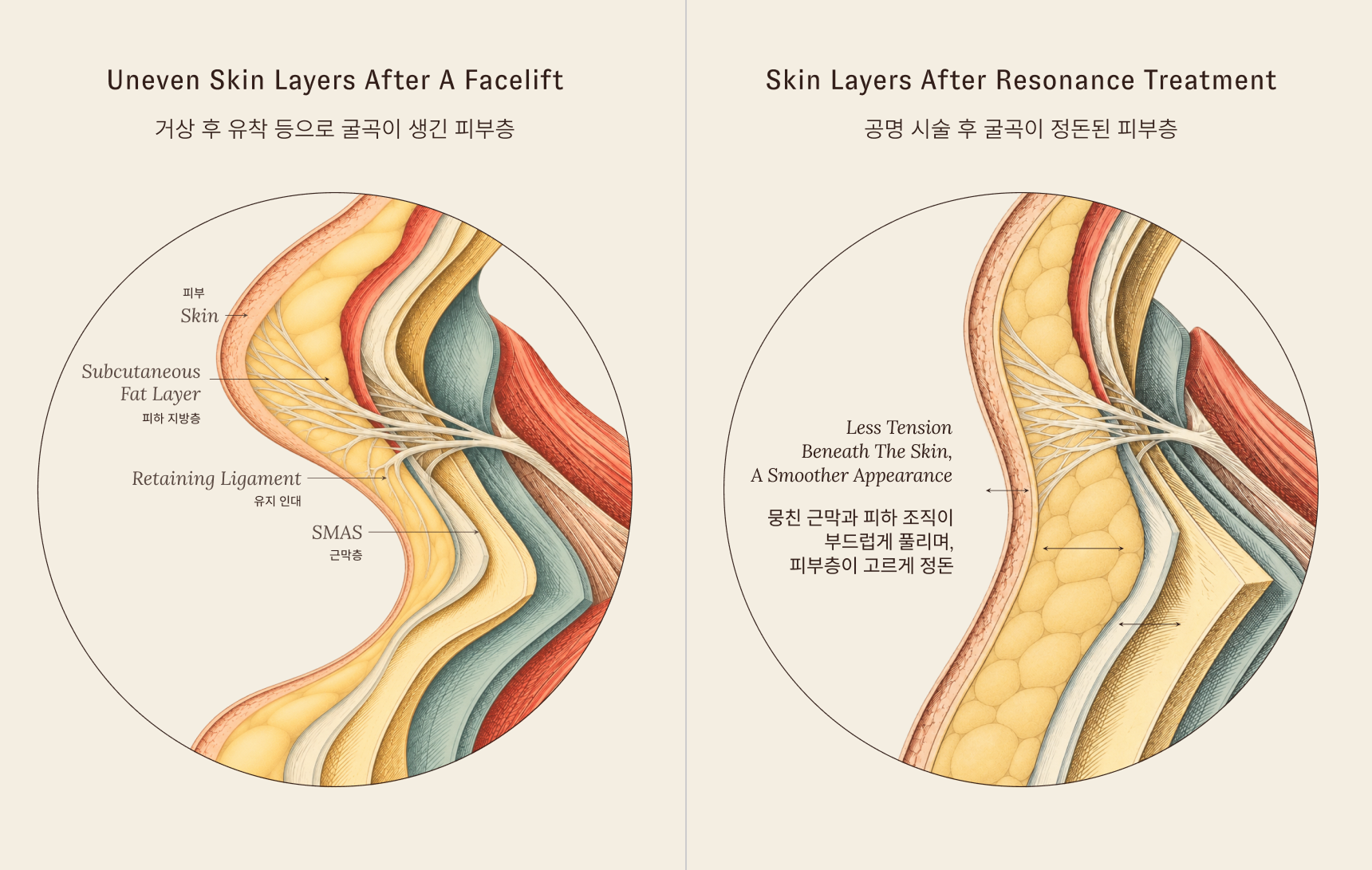
Facial contours are shaped by the skin, subcutaneous fat, and the deeper tissues that support the face. Depending on the surgical technique, a facelift repositions the skin along with supporting structures such as the superficial musculoaponeurotic system (SMAS). As the direction of tissue tension and the transitions between areas of facial volume change, a pre-existing hollow beneath the cheekbone may become more noticeable, or the contour from the cheek to the jawline may remain uneven.
Tissue changes during healing can also affect facial contours. Scar tissue around the surgical site may feel firm, and adhesions between the skin and underlying tissues can cause a localized pulling sensation during facial movement. Two areas of unevenness may look similar, even when one reflects a difference in facial volume and the other reflects how the tissues move.
If fillers, threads, or implants were previously placed in the area, the dermatologist also reviews where they were placed and how the surrounding tissue has changed. The assessment considers when the unevenness first appeared, which expressions make it more visible, and whether any areas feel firm to the touch.
Non-Thermal Resonance Full-Layer Stimulation | An Approach Across Multiple Tissue Layers
KUDO’s Non-Thermal Resonance Full-Layer Stimulation delivers resonance energy to the skin, subcutaneous fat, and muscle without intense surface heating.
When considering this treatment after a facelift, the dermatologist assesses both where the contour appears uneven and where the pulling begins. A shallow groove below the cheek, for example, may be visible in a different location from the area that pulls when smiling or feels firm to the touch. The dermatologist compares facial contours at rest and in motion, then considers the condition of the underlying tissues and the progress of healing to determine whether treatment is appropriate, which areas to treat, and when to begin.
Who May Benefit from a Consultation
• Those with persistent unevenness along the jawline, cheeks, or near an incision after swelling has subsided
• Those who notice localized pulling or dimpling when smiling or speaking
• Those who feel a firm area where fillers, threads, or implants were previously placed
• Those considering revision surgery who want to explore care options based on the current condition of their tissues
Understanding the cause of subtle contour changes after a facelift starts with a close assessment of facial anatomy and how the tissues have changed during healing. In a private, one-on-one consultation at KUDO Dermatology Clinic, a dermatologist reviews your surgical and treatment history and examines where the unevenness and pulling originate.
The aim of post-facelift care is for the contours you see at rest to look natural as you smile and speak. If unevenness or pulling persists after a facelift, a private consultation at KUDO Dermatology Clinic in Hannam-dong can help you explore care suited to your facial anatomy and stage of recovery.